
 +86-150-5857-3741+86-136-0679-8873
 carolzhang@hnhktech.com
+86-150-5857-3741+86-136-0679-8873carolzhang@hnhktech.com
carolzhang@hnhktech.com
+86-150-5857-3741+86-136-0679-8873carolzhang@hnhktech.com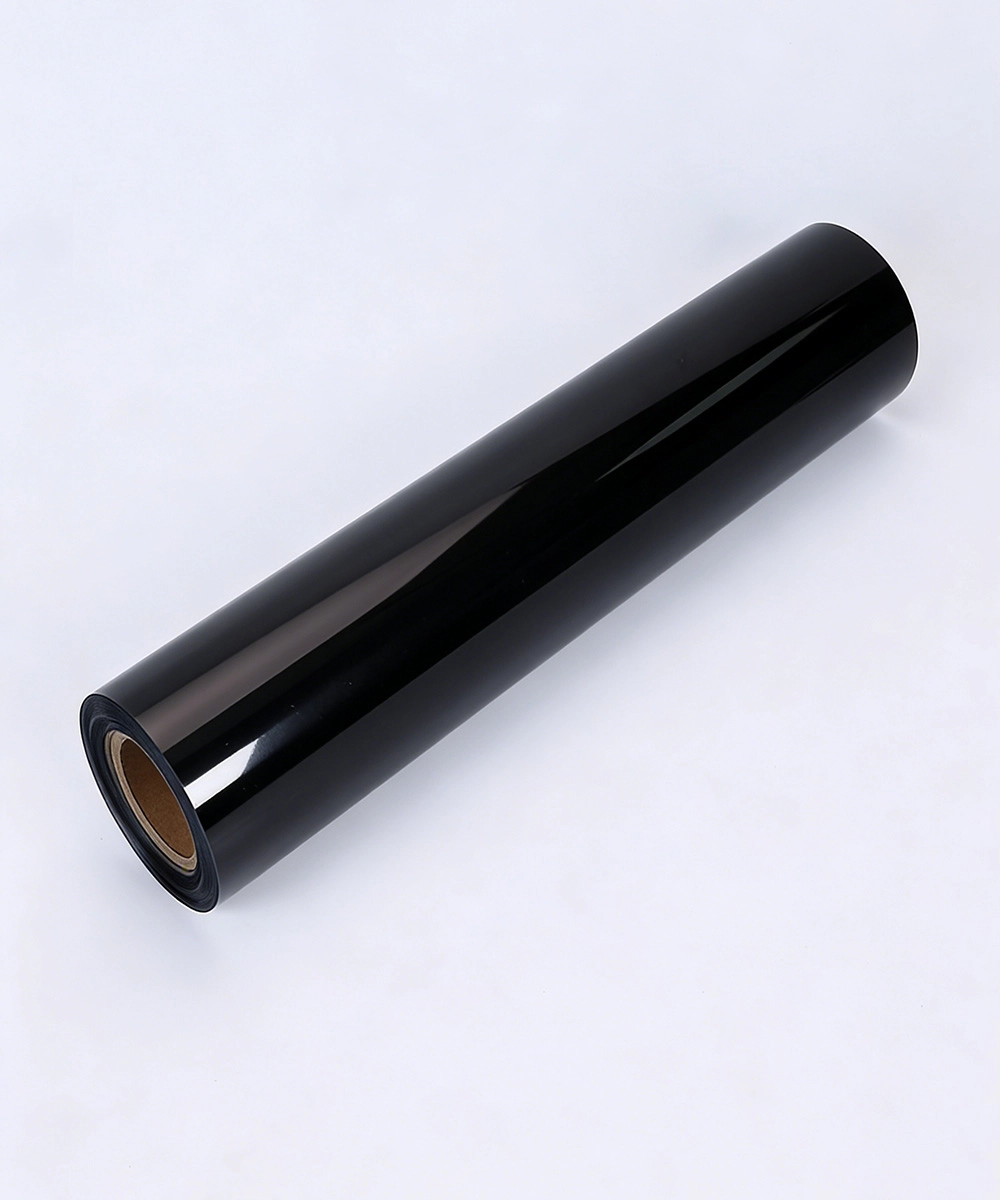
HIPS sheet is a new eco-friendly packaging material developed in recent years. With its excellent thermoforming properties, good impact resistance, environmental performance, and hygienic properties, it is widely used in thermoformed packaging products for pharmaceuticals, food, toys, electronics, and apparel. Product categories include conductive thermoforming sheets, anti-static thermoforming sheets, and standard thermoforming sheets.
1. Low static electricity generation, suitable for packaging products requiring low static levels.
2. Easy vacuum forming, with finished products exhibiting excellent impact resistance.
3. Good hygienic properties, safe for direct food contact without producing harmful substances.
4. Superior hardness compared to other sheet materials of equivalent thickness. Thermoformed cups are suitable for both hot and cold beverages.
5. Environmentally compliant, recyclable, and incineration of waste does not produce environmentally harmful substances.
1. Electronic tray packaging
2. Food packaging
3. Dairy product packaging (refrigerated applications)
|
Item |
Conductive |
Antistatic |
Normal |
|
Density(±0.02) |
1.06g/cm3 |
1.06g/cm3 |
1.06g/cm3 |
|
Thickness(±0.015) |
0.2mm-2mm |
0.2mm-2.0mm |
0.2mm-2.0mm |
|
S.R.(Ω) |
104-6 |
109-11 |
≥1012 |
|
Max.Width (±1.0mm) |
640mm |
640mm |
640mm |
|
Max. Weight(±0.5KG) |
250KG |
250KG |
250KG |
High-Impact Polystyrene (HIPS) plastic sheets are a versatile, rigid thermoplastic material produced by incorporating rubber particles — typically polybutadiene — into a standard polystyrene matrix. This modification dramatically improves the impact resistance of ordinary polystyrene, yielding a material that combines structural rigidity with toughness, ease of processing, and broad functional adaptability.
HIPS sheets have emerged as a preferred eco-friendly packaging solution across numerous industries. Their combination of excellent thermoformability, superior surface finish, and consistent mechanical properties makes them a reliable choice for manufacturers seeking performance and cost-efficiency in a single material.
At Haining Hongkai Technology Co., Ltd., our HIPS plastic sheets are engineered under strict quality control standards and are available in three functional grades:
Explore our full HIPS Plastic product range, including our specialist HIPS Conductive Carrier Tape Sheets.
Understanding HIPS begins with its base material. Standard polystyrene (PS) is a clear, brittle thermoplastic that, while easy to process, has limited toughness. High-impact polystyrene resolves this shortcoming through a rubber-toughening mechanism.
This microstructure gives HIPS its characteristic combination of stiffness and toughness — properties that pure polystyrene cannot achieve.
| Property | Typical Value | Test Method |
| Density | 1.04 – 1.06 g/cm³ | ISO 1183 |
| Tensile Strength | 20 – 35 MPa | ISO 527 |
| Flexural Modulus | 1,800 – 2,500 MPa | ISO 178 |
| Izod Impact Strength (notched) | 60 – 120 J/m | ISO 180 |
| Elongation at Break | 20 – 50% | ISO 527 |
| Rockwell Hardness (R scale) | 60 – 80 | ASTM D785 |
| Property | Typical Value |
| Vicat Softening Point | 85 – 100°C |
| Heat Deflection Temperature | 70 – 90°C (at 0.45 MPa) |
| Continuous Use Temperature | Up to ~70°C |
| Processing/Forming Temperature | 130 – 175°C |
| Melt Flow Index | 3 – 10 g/10 min (200°C / 5 kg) |
| Grade | Surface Resistance (Ω) | Application |
| Conductive | 10⁴ – 10⁶ | Electronic component trays, ESD-sensitive packaging |
| Antistatic | 10⁹ – 10¹¹ | General electronic packaging, clean-room trays |
| Normal (Standard) | ≥ 10¹² | Food, pharmaceutical, retail packaging |
The following table reflects the standard product parameters for HIPS thermoforming sheets manufactured by Haining Hongkai Technology Co., Ltd.:
| Parameter | Conductive Grade | Antistatic Grade | Normal Grade |
| Density (±0.02) | 1.06 g/cm³ | 1.06 g/cm³ | 1.06 g/cm³ |
| Thickness Range (±0.015 mm) | 0.2 mm – 2.0 mm | 0.2 mm – 2.0 mm | 0.2 mm – 2.0 mm |
| Surface Resistance (Ω) | 10⁴ – 10⁶ | 10⁹ – 10¹¹ | ≥ 10¹² |
| Maximum Sheet Width (±1.0 mm) | 640 mm | 640 mm | 640 mm |
| Maximum Roll Weight (±0.5 kg) | 250 kg | 250 kg | 250 kg |
Custom Specifications Available: Hongkai can produce HIPS sheets to customer-specified dimensions, colors, surface finishes, and functional requirements. Contact our team to discuss your project needs.
HIPS sheets offer a distinctive set of performance advantages that set them apart from comparable thermoplastic materials:
HIPS softens uniformly within a well-defined temperature window (typically 130–175°C), enabling precise vacuum forming, pressure forming, and plug-assist forming. Formed parts retain dimensional accuracy with minimal springback. The low forming temperature reduces energy consumption in production.
The rubber-toughened microstructure of HIPS absorbs mechanical shock effectively. Finished packaging maintains structural integrity through the stresses of transport, stacking, and handling — a critical requirement for pharmaceutical blister packs, electronics trays, and food containers.
HIPS delivers higher effective stiffness per unit thickness compared to many competing packaging films and sheets. This allows manufacturers to achieve required structural performance with thinner gauges, reducing material consumption and lowering per-unit cost.
All three HIPS grades — standard, antistatic, and conductive — are engineered to manage electrostatic discharge risk at the level appropriate to the application. This is especially important in electronics packaging, where static discharge can damage sensitive components.
Standard-grade HIPS sheets comply with regulations governing direct food contact materials. The polymer formulation does not migrate harmful substances into packaged food under normal storage conditions, making it safe for fresh produce trays, dairy containers, and beverage cups.
Thermoformed HIPS cups and containers are dimensionally stable across a temperature range suitable for both hot drinks and refrigerated/chilled foods. This dual-temperature performance is a valued feature in food service and dairy packaging.
HIPS is categorized under recycling code #6 (PS). It is recyclable within established polystyrene recycling streams. Incineration of HIPS does not generate persistent chlorinated compounds or heavy-metal emissions — a key consideration for manufacturers operating under environmental compliance frameworks.
The surface energy of HIPS is well suited to solvent-based and UV inks, hot-stamping foils, and in-mold labeling. Branded packaging with vivid graphics is readily achievable without requiring primers or surface activation treatments.
HIPS offers a favorable balance of material cost, processing ease, and end-use performance. Its wide processing window, low forming temperatures, and compatibility with standard thermoforming equipment reduce total production costs.
Choosing the right sheet material depends on the specific demands of each application. The table below compares HIPS with the other thermoplastic sheets manufactured by Haining Hongkai:
| Property | HIPS | APET | ABS |
| Clarity | Opaque | Transparent | Opaque |
| Impact Resistance | Good | Moderate | Excellent |
| Thermoformability | Excellent | Excellent | Good |
| Food Contact Safety | Yes (standard grade) | Yes | Limited |
| Chemical Resistance | Moderate | Good | Good |
| Surface Hardness | Moderate | High | High |
| Typical Applications | Food trays, electronics packaging, dairy cups | Food packaging, retail blister packs | Industrial panels, protective housings |
| Recycling Code | #6 (PS) | #1 (PET) | #7 |
For transparent packaging or applications requiring higher clarity, consider our APET Plastic sheets. For superior hardness and chemical resistance in industrial applications, our ABS Plastic sheets may be more appropriate.
HIPS thermoforming sheets serve a wide range of end-use industries.
HIPS is one of the most thermoformer-friendly thermoplastic materials available. The following outlines the typical processing sequence:
| Forming Method | Suitability | Notes |
| Vacuum Forming | Excellent | Most common method; suitable for shallow to medium-depth parts |
| Pressure Forming | Excellent | Achieves sharper detail and textured surfaces |
| Plug-Assist Forming | Good | Used for deep-draw applications requiring uniform wall thickness |
| Twin-Sheet Forming | Moderate | Applicable for hollow double-wall components |
| Parameter | Range |
| Sheet Heating Temperature | 130°C – 175°C |
| Mold Temperature | 25°C – 65°C |
| Forming Pressure (pressure forming) | 0.5 – 8 bar |
| Trim Method | Steel-rule die, punch-and-die, router |
Sustainability is an increasingly important consideration in packaging material selection. HIPS addresses environmental concerns in the following ways:
We are committed to responsible production. Our facility operates under ISO 14001 environmental management certification. To learn more about our environmental values and factory practices, visit our About Us page.
Haining Hongkai Technology Co., Ltd. maintains rigorous quality control throughout the manufacturing process:
All shipments include batch traceability documentation, enabling full product history tracking from raw material to finished sheet.
A: Hongkai HIPS sheets are available from 0.2 mm to 2.0 mm in all three grades (standard, antistatic, and conductive), with a thickness tolerance of ±0.015 mm.
A: Standard-grade HIPS sheets are manufactured to be safe for direct food contact. They do not release harmful substances into food under normal packaging conditions and comply with applicable food contact material regulations.
A: Yes. HIPS retains adequate mechanical performance at refrigeration temperatures (typically 0–8°C), making it suitable for dairy product containers, chilled food trays, and refrigerated beverage packaging.
A: The key difference is the level of static dissipation. Conductive HIPS (surface resistance 10⁴–10⁶ Ω) provides rapid discharge of electrostatic charge and is used for highly sensitive electronic components. Antistatic HIPS (10⁹–10¹¹ Ω) provides moderate protection and is suitable for general electronic packaging applications.
A: Yes. HIPS is easily pigmented, and Hongkai can produce sheets in a wide range of custom colors to match branding requirements. Please contact us to discuss color matching.
A: The maximum sheet width is 640 mm (±1.0 mm) and the maximum roll weight is 250 kg (±0.5 kg) for all grades.
A: HIPS offers easier thermoformability and lower processing temperatures than ABS, making it more economical to process. ABS provides higher chemical resistance and surface hardness, making it better suited for demanding industrial applications. For packaging applications, HIPS is typically the preferred choice. See our ABS Plastic sheets page for a detailed comparison.
Share Your Contact Information For Personalized Service.